
Introduction
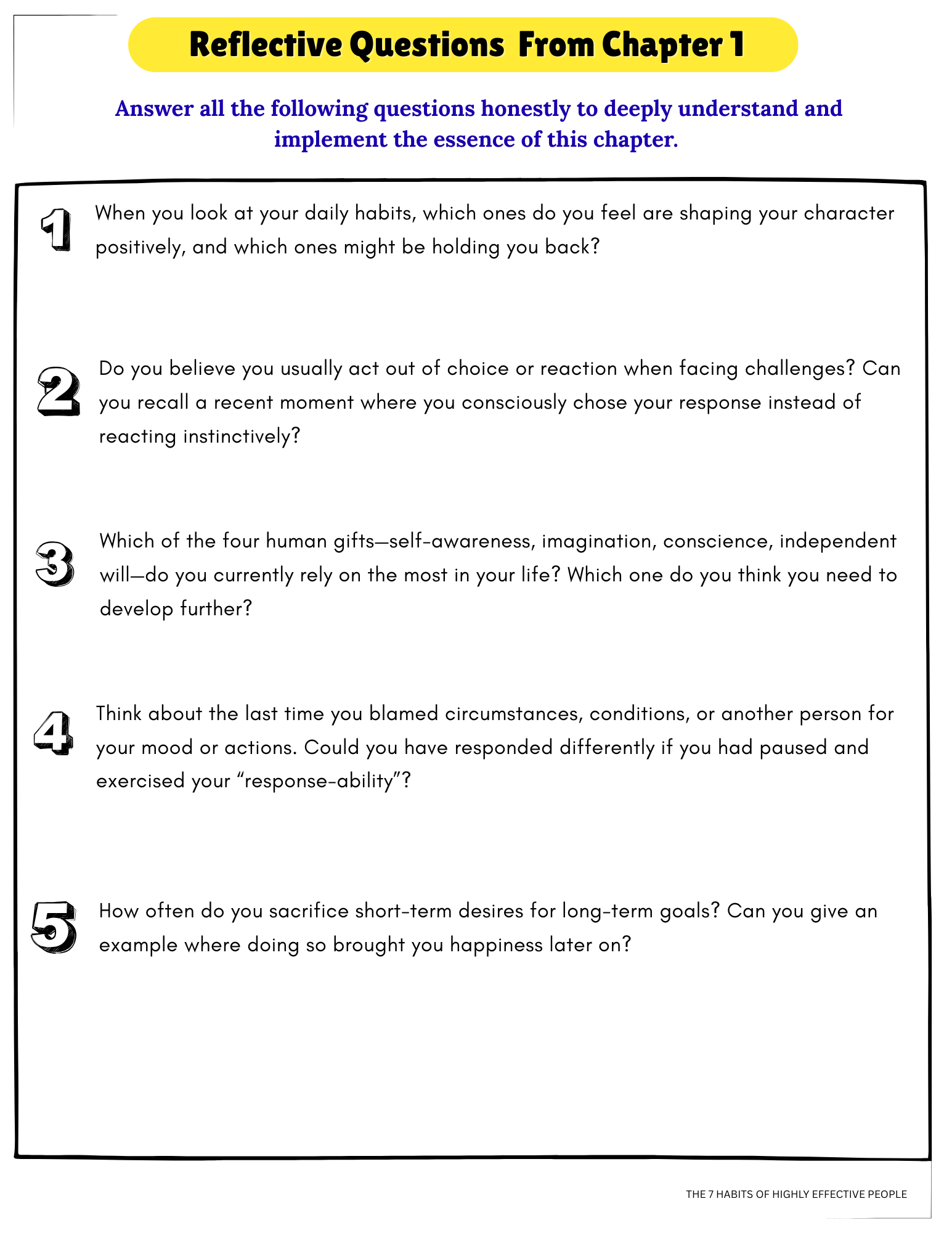
Our character is fundamentally shaped by our habits. Stephen Covey’s timeless classic, “The 7 Habits of Highly Effective People,” teaches us that habits are the intersection of knowledge (what to do), skill (how to do it), and desire (motivation to do it). True happiness comes from sacrificing what we want now for what we want eventually. This book summary explores the seven transformative habits that can change your life.
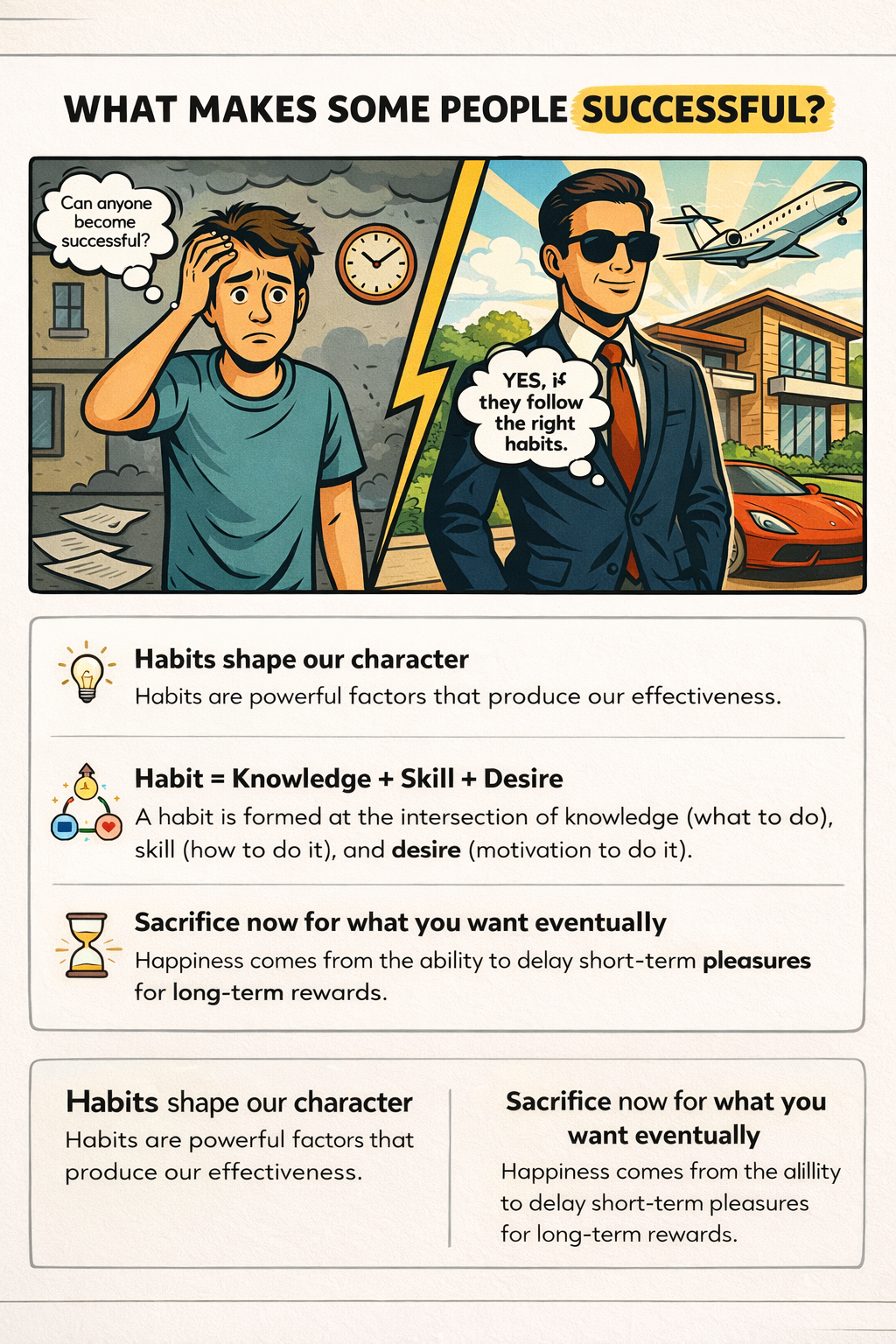
The Journey from Dependence to Interdependence
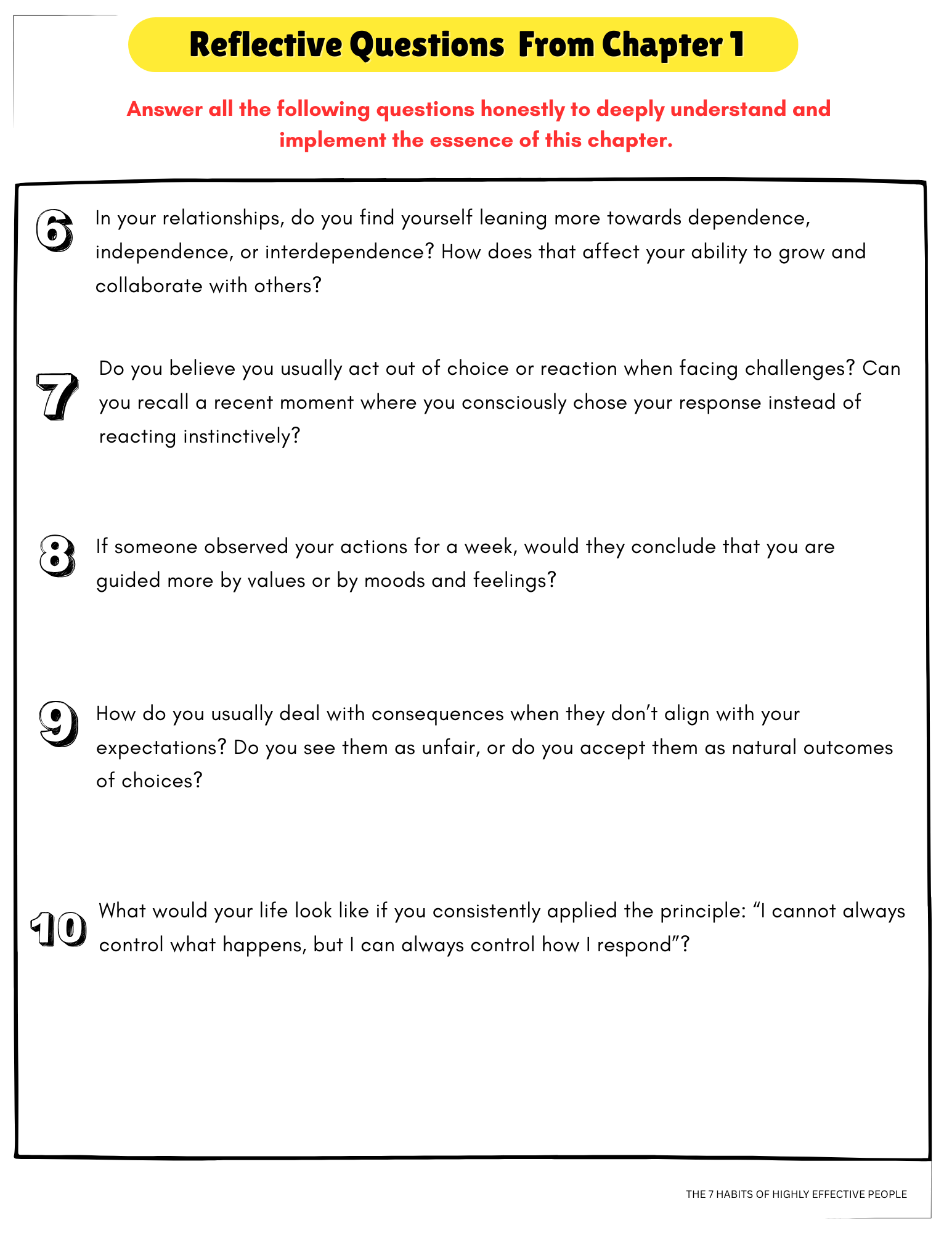
Before diving into the habits, it’s crucial to understand that real independence means making your own choices instead of reacting to circumstances. However, life naturally requires connection with others. We achieve far more through interdependence—working together while maintaining personal strength and independence.
Habit 1: Be Proactive
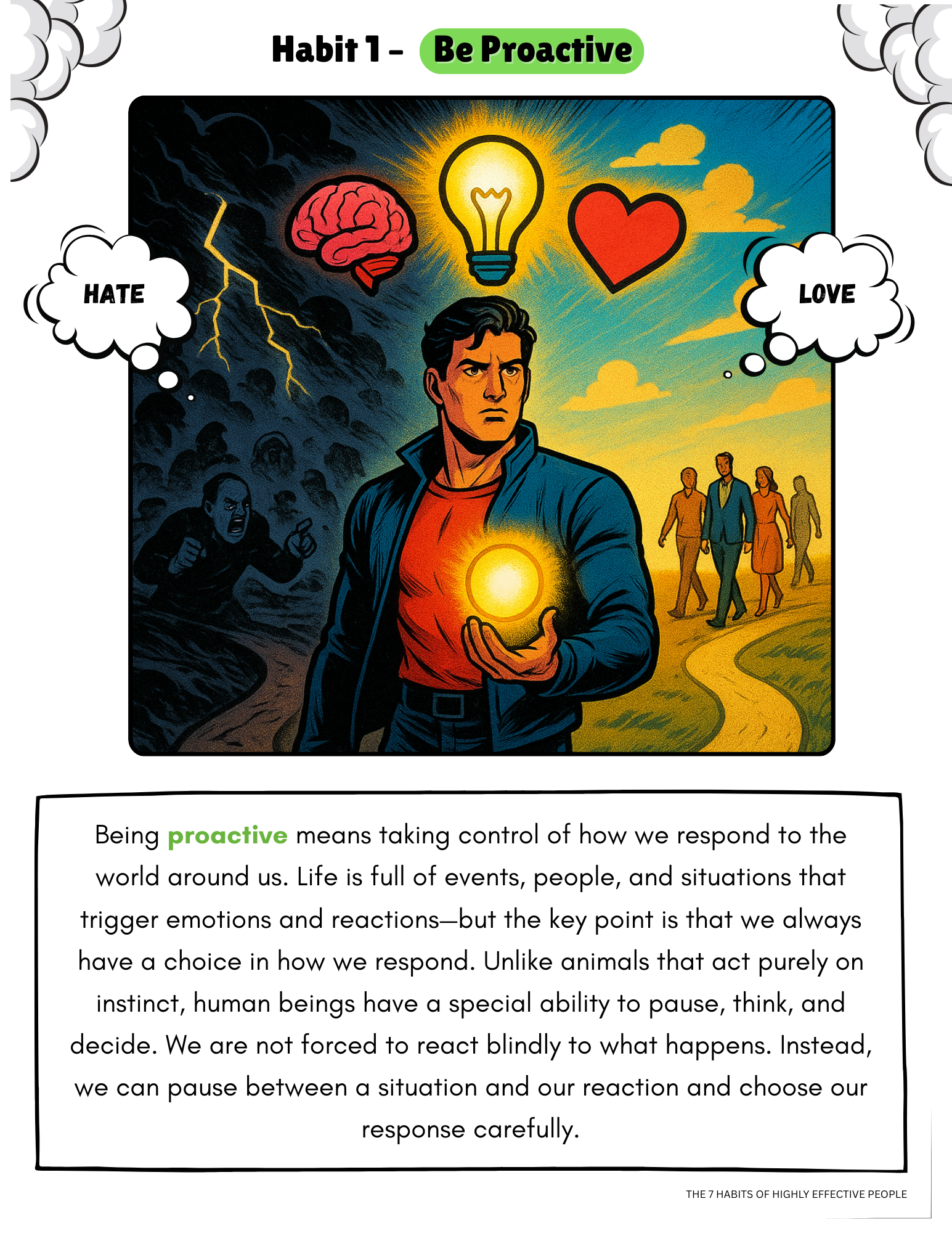
Take Control of Your Response
Want to read all 7 Habits in animated form? Click the button to Read.

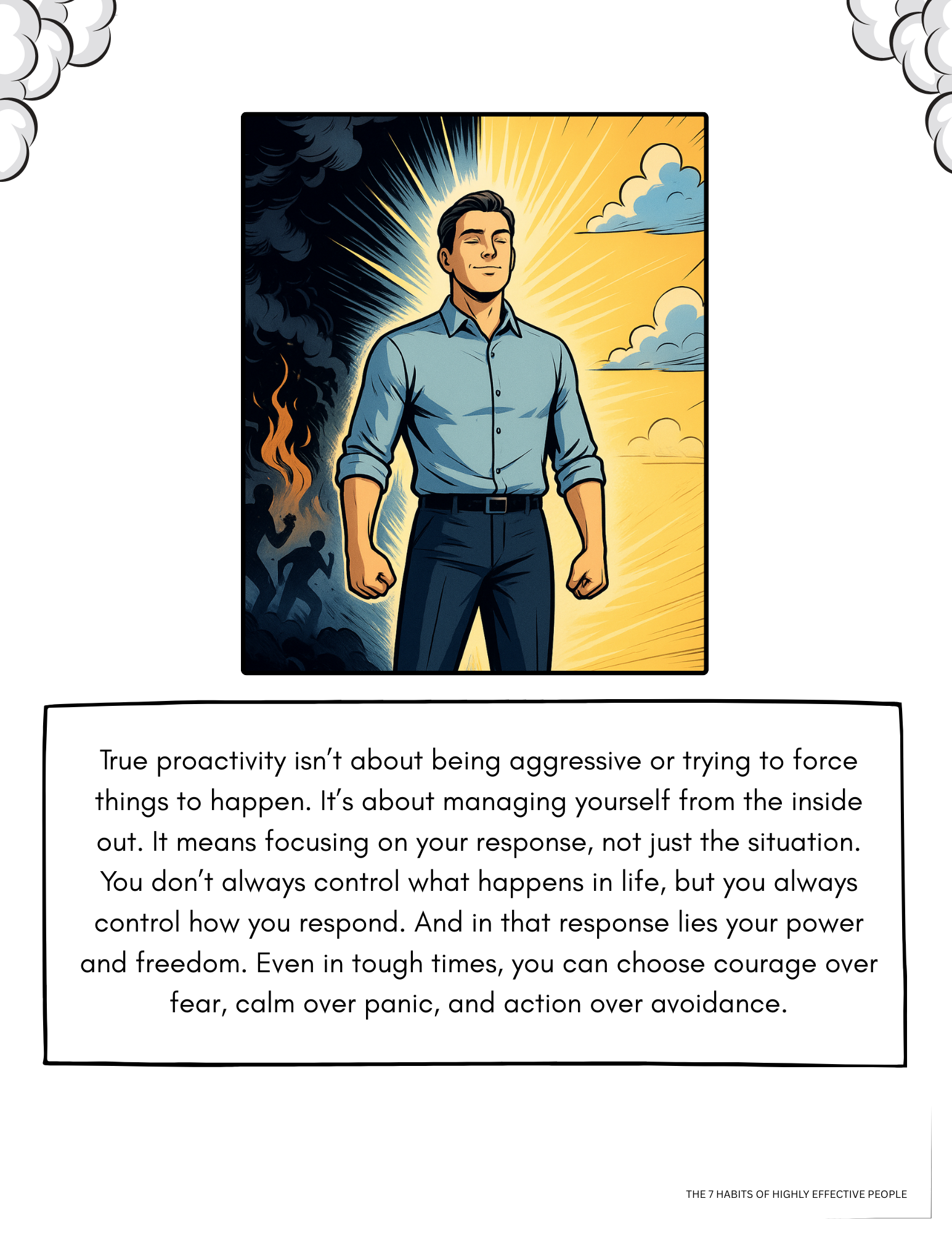
Being proactive means taking control of how you respond to the world around you. Unlike animals that act on pure instinct, humans possess a unique ability to pause, think, and decide. We’re not forced to react blindly—we can choose our response carefully.
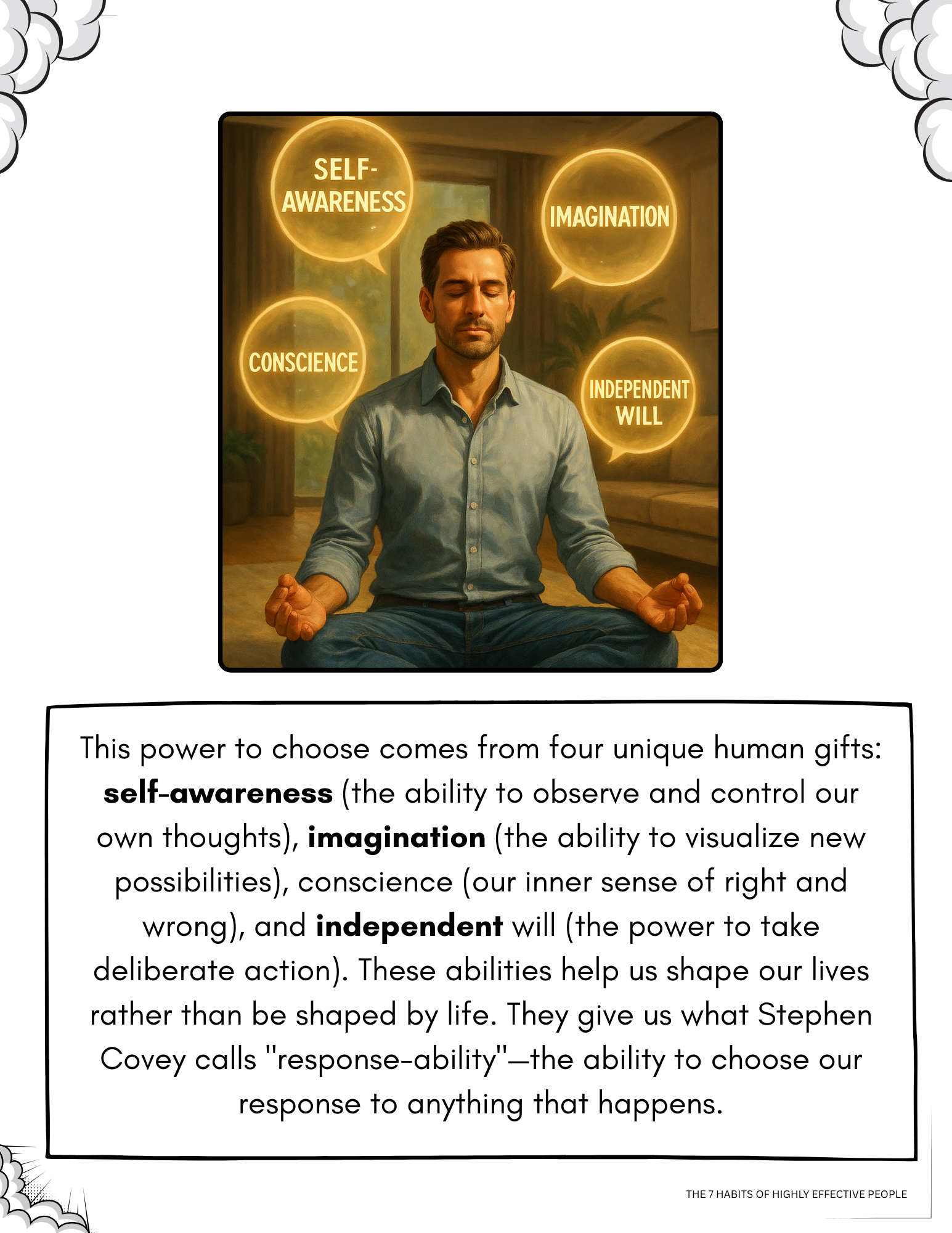
This power comes from four unique human gifts:
- Self-awareness: The ability to observe and control our own thoughts
- Imagination: Visualizing new possibilities
- Conscience: Our inner sense of right and wrong
- Independent will: The power to take deliberate action
Proactive vs. Reactive
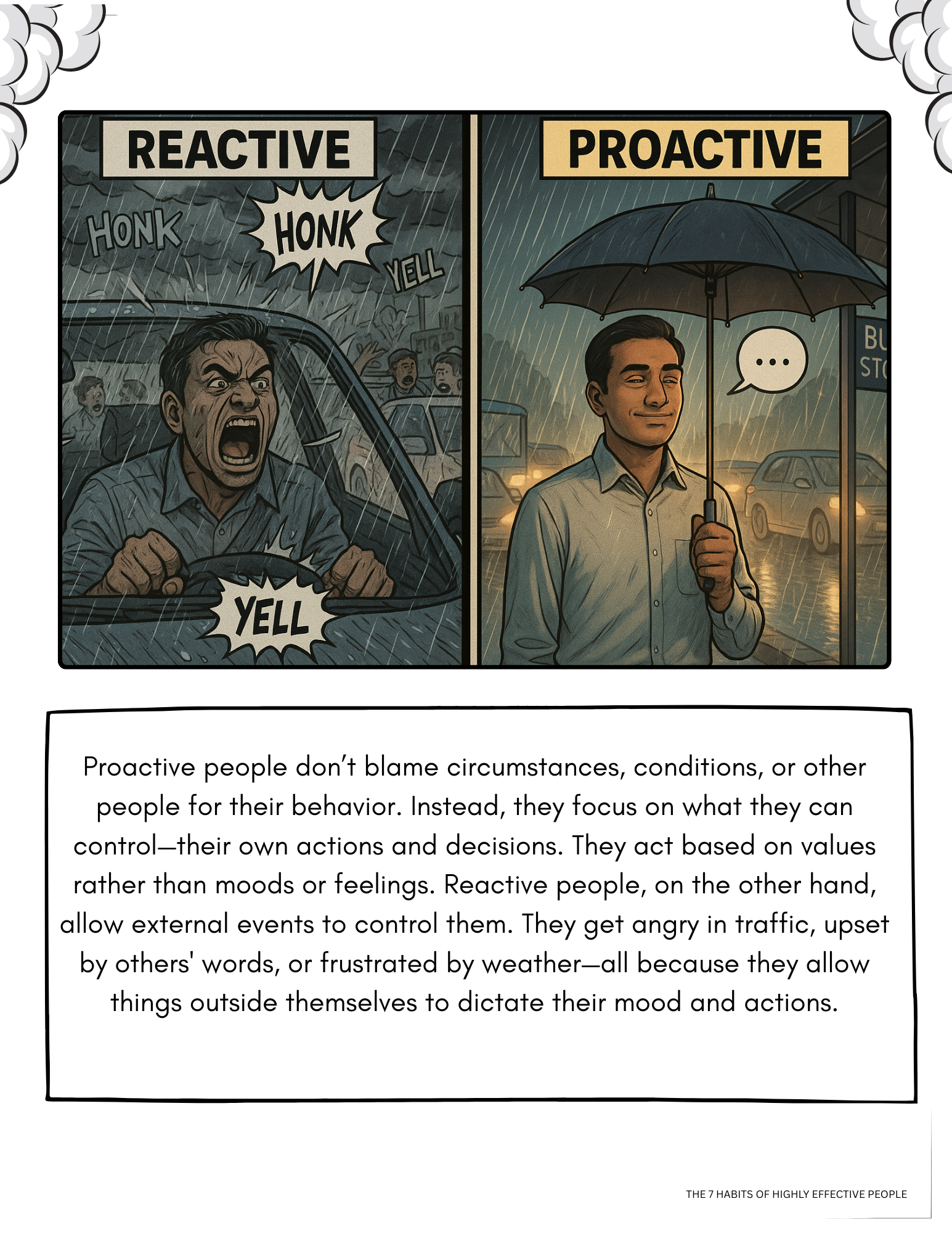
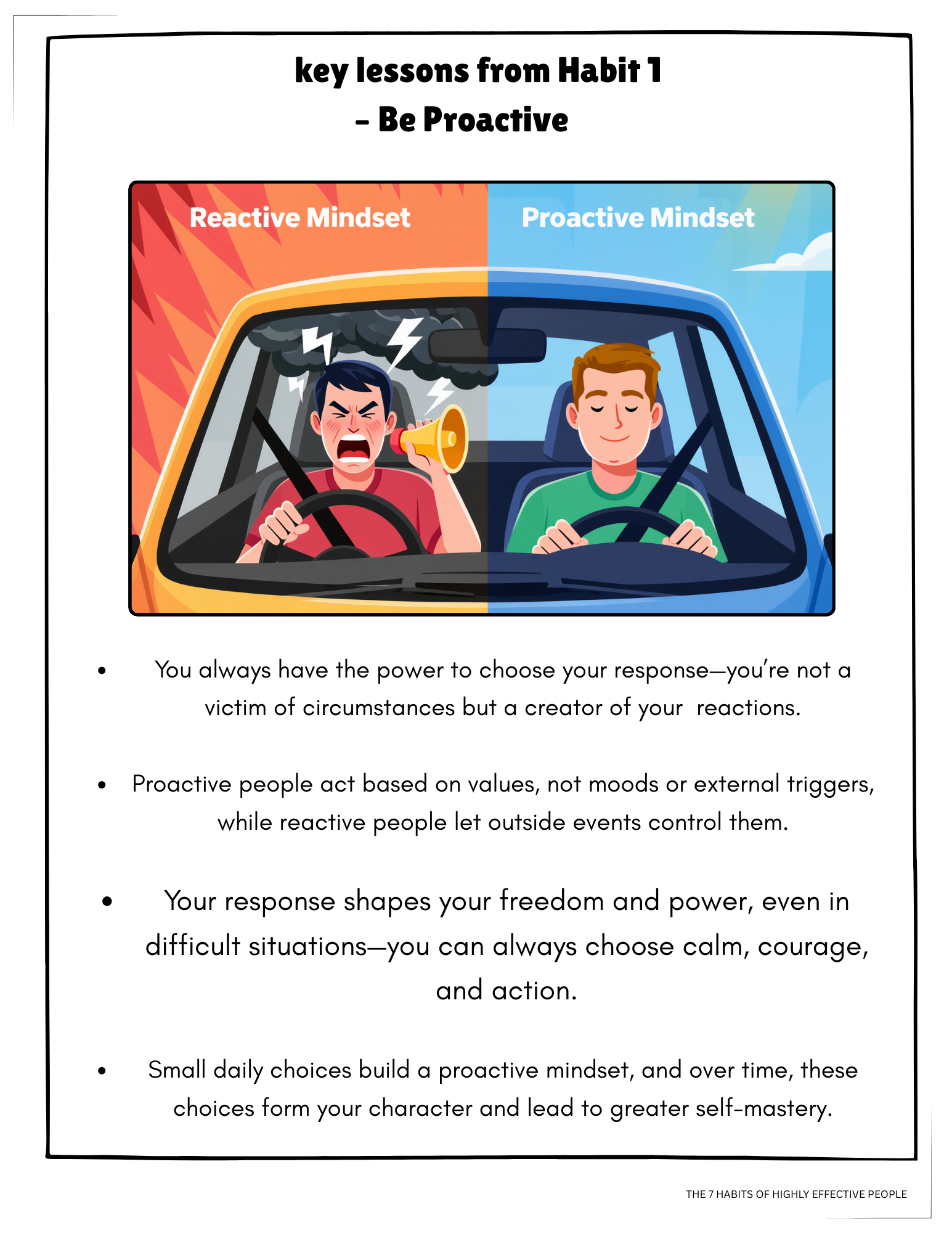
Proactive people don’t blame circumstances, conditions, or others for their behavior. They focus on what they can control—their own actions and decisions. They act based on values rather than moods or feelings.
Reactive people, conversely, allow external events to control them. They get angry in traffic, upset by others’ words, or frustrated by weather—all because they let things outside themselves dictate their mood and actions.
Key Takeaway: You don’t always control what happens in life, but you always control how you respond. In that response lies your power and freedom.
Habit 2: Begin With the End in Mind
Design Your Life Before Life Designs You
Beginning with the end in mind means deciding first what kind of life you want, then living in a way that matches that future. Most people just react to life—whatever happens, they adjust. But effective people design their life before life designs it for them.
Think of building a house. You don’t start placing bricks randomly. First, you create a blueprint—how many rooms, where the kitchen will be, how big the house should be. Life works the same way. First, create your future in your mind, then build it in real life.
The Personal Mission Statement
The best tool for this habit is a personal mission statement that answers three questions:
- Who do I want to be?
- What do I want to do?
- What values will guide my life?
For example: “I want to be a disciplined, kind, and confident person. I want to build meaningful work that helps people. I will live by honesty, hard work, and self-respect.”
Powerful Visualization Exercises
- Imagine your own funeral: What do you want people to say about you? That you were kind? Brave? Honest? Hardworking? Loving?
- Imagine your 50th wedding anniversary: What kind of spouse or parent do you want to be remembered as?
- Imagine your retirement day: What do you want people to say about your work and contributions?
These exercises help your heart understand what your mind already knows.
Key Takeaway: You create your life first in your mind, then in reality. Without a clear vision, you live by default, not by design.
Habit 3: Put First Things First
Do What’s Important Before What’s Urgent
Habit 3 is about using your time in the smartest way. It means doing what is truly important before doing what only feels urgent. Many people stay busy all day but still don’t move forward in life. Why? Because they spend their time on things that shout loud, not on things that matter most.
The Four Quadrants of Time Management
- Important and Urgent: Emergencies, crises, deadlines. These must be done immediately, but if your life is always full of crises, you didn’t prepare earlier.
- Important but Not Urgent (Quadrant 2 – THE POWER ZONE):
- Planning your future
- Studying daily
- Exercising
- Building relationships
- Learning new skills
- Thinking creatively
- Not Important but Urgent: Random phone calls, useless meetings, unnecessary messages. They make you feel busy but don’t move your life forward.
- Not Important and Not Urgent: Scrolling endlessly, gossiping, time-wasting, lazy comfort. Too much time here slowly destroys your future.
The Goal: Spend maximum time in Quadrant 2—Important but Not Urgent. This is where strong people are built.
Prevention Over Crisis
Successful people are prevention-minded, not problem-minded. They don’t wait for fire—they stop it before it starts. For example:
- Study daily, and exams won’t become a crisis
- Exercise regularly, and sickness reduces
- Save money, and financial problems decrease
Key Takeaway: Important is more powerful than urgent. Being busy is not the same as being effective. Your future is built in the “important but not urgent” zone.
Habit 4: Think Win/Win
Finding Solutions Where Everyone Benefits
Habit 4 means looking for solutions where everyone benefits. It’s not about beating others or losing to them. It’s about finding a way where both sides feel satisfied, respected, and happy with the result.
Many people think life is a competition—if you win, I must lose. But this thinking creates fights, stress, and broken relationships. Win/Win thinking says: “Let’s find a way where both of us can succeed.”
Six Relationship Paradigms
- Win/Win: Both people benefit and feel good about the decision
- Win/Lose: “I must win, you must lose” (creates resentment)
- Lose/Win: “I lose, you win” (people give up their needs to keep peace)
- Lose/Lose: “If I can’t win, I’ll make sure you don’t either”
- Win: “I only care about myself”
- Win/Win or No Deal: If we can’t find a mutually beneficial solution, we peacefully walk away
Five Requirements for Win/Win
- Character: Integrity, maturity, and abundance mentality—believing there’s enough success for everyone
- Relationships: Strong relationships built on trust make Win/Win possible
- Agreements: Focus on results, not control
- Systems: Rules and rewards must support fairness
- Processes: Separate the person from the problem; focus on needs, not ego
Key Takeaway: Life is not about winning over people—it’s about winning with people. When you help others win, you also grow stronger.
Habit 5: Seek First to Understand, Then to Be Understood
The Power of Empathetic Listening
Habit 5 teaches one simple but powerful rule: First try to understand the other person. Only after that, try to make them understand you.
Most people do the opposite. When someone talks, we’re not really listening—we’re preparing our reply. We want to fix, advise, argue, or prove. But people don’t want solutions first. They want to feel understood first.
Real Listening vs. Autobiographical Listening
Most people listen through their own life story. They compare (“This happened to me too…”), judge (“You shouldn’t feel like that”), or plan replies instead of hearing feelings.
Habit 5 teaches empathetic listening, which means listening to:
- Words
- Feelings
- Tone
- Body language
You try to feel what the other person feels. You don’t push your story into their story.
Diagnose Before You Prescribe
Before solving a problem, first understand it. You don’t give medicine before knowing the disease. You don’t design a bridge before understanding the forces. Understanding always comes first.
When people feel truly understood, they open up, talk more honestly, trust more deeply, and then they’re ready for help.
The Three Elements of Communication
- Ethos (Your character): Do people trust you?
- Pathos (Emotional connection): Do they feel safe with you?
- Logos (Logic): Are your ideas clear and sensible?
Order matters: First character, then relationship, then logic. Most people jump straight to logic and talk facts before building trust.
Key Takeaway: Understanding comes before advice. People open up when they feel heard. Listening is more powerful than speaking.
Habit 6: Synergize
The Whole Is Greater Than the Sum of Its Parts
Synergy means that when people work together with trust and respect, they can create results far better than what they could achieve alone. Synergy is not just teamwork—it’s creative cooperation that produces new ideas, new solutions, and unexpected success.
Synergy is the result of practicing all the earlier habits. When people communicate openly, listen deeply, respect differences, and think Win/Win, true synergy becomes possible. In such an environment, people are not afraid to share ideas, take risks, or think differently.
Trust: The Foundation of Synergy
When trust is low, people protect themselves and creativity dies. When trust is high, people cooperate freely and powerful ideas are born. The best solutions come when people with different ways of thinking—mental, emotional, and psychological—work together. Differences are not a problem; they are the source of creativity.
Synergy in Action
Synergy can happen in teams, families, workplaces, or even within yourself—by balancing logic and emotion, strength and kindness. It is the final result of living all the habits together: proactive action, clear vision, right priorities, Win/Win thinking, deep understanding, and teamwork.
Key Takeaway: Together is stronger than alone. Differences create power, not weakness. When hearts, minds, and values work together, extraordinary things happen.
Habit 7: Sharpen the Saw
Continuous Self-Renewal
Habit 7 means taking time to renew yourself so you don’t burn out. Just like a worker cannot cut wood properly with a blunt saw, you cannot live effectively if you’re tired, weak, stressed, or empty inside. You must regularly “sharpen your saw” in four areas:
1. Physical Renewal Caring for your body through exercise, rest, good food, and sleep. Even 30 minutes of daily exercise gives you more energy for the rest of the day. When your body is strong, your mind and mood also become stronger.
2. Spiritual Renewal Reconnecting with your values and purpose through prayer, meditation, nature, music, books, or quiet thinking. It reminds you why you live and what truly matters. A mission statement helps here—it brings you back to your center when life becomes noisy.
3. Mental Renewal Growing your mind through reading good books, learning new skills, writing, thinking deeply, and planning. Instead of letting TV and social media control your mind, strong people choose learning. A sharp mind helps you make better decisions.
4. Social and Emotional Renewal Building good relationships and meaningful service through trust, listening, teamwork, and helping others. Real happiness grows when you live by strong values and make a positive difference in people’s lives.
The Upward Spiral
All four areas are connected. If you ignore one, the others also suffer. When you improve one area, the others also grow. Balanced renewal creates powerful growth.
Habit 7 is the habit that keeps all other habits alive. It creates an upward spiral of life: Learn → Commit → Do → Repeat. Each time you grow stronger, wiser, and better than before.
Key Takeaway: You cannot give your best with an empty self. Rest is not laziness—it is preparation. Growth comes from daily self-care.
Conclusion: Putting It All Together
The 7 Habits of Highly Effective People is not just a book—it’s a philosophy for living. These habits build upon each other, creating a framework for personal and professional transformation:
- Habits 1-3 (Private Victory): Be Proactive, Begin With the End in Mind, Put First Things First—these help you move from dependence to independence.
- Habits 4-6 (Public Victory): Think Win/Win, Seek First to Understand Then to Be Understood, Synergize—these help you move from independence to interdependence.
- Habit 7 (Renewal): Sharpen the Saw—this ensures continuous growth and improvement.
Success is not a destination but a journey of consistent, daily choices aligned with your values and vision. Small daily choices build a proactive mindset, and over time, these choices form your character and lead to greater self-mastery.
Remember: You always have the power to choose your response. You’re not a victim of circumstances but a creator of your reactions. Your habits shape your character, and your character shapes your destiny.
Start today. Choose one habit to focus on. Practice it daily. And watch as your life transforms, one habit at a time.