
Journaling is no longer just about writing feelings in a diary. In 2026, daily journaling is a proven tool for productivity, focus, mental clarity, and self-discipline.
If you struggle with:
- Procrastination
- Lack of consistency
- Low focus or motivation
- Feeling confused about goals
Then learning how to journal daily in the right way can completely change your life.
In this guide, you’ll learn:
- What journaling really is
- How beginners should start journaling
- A step-by-step explanation of the 1% Better Everyday Journal (guided journal)
- Real-life journaling examples
Why Journaling Is Important for Personal Development
Journaling works because it forces your brain to slow down, reflect, and think clearly.
Scientifically, journaling:
- Improves focus and decision-making
- Activates the prefrontal cortex (thinking brain)
- Reduces stress and anxiety
- Builds self-awareness and discipline
That’s why successful students, professionals, athletes, and entrepreneurs use journaling daily.
What Is a Guided Journal?
A guided journal already has:
- Structured questions
- Daily prompts
- Reflection sections
You don’t have to think what to write.
You just answer the questions.
The 1% Better Everyday Journal is designed exactly for this purpose—especially for:
- Beginners
- Students
- Working professionals
- People who want discipline without confusion
How to Use the 1% Better Everyday Journal (Step by Step)
1️⃣ Daily Actions (Your Everyday Habits)

This section is about habits you want to do every day.
Examples:
- Reading
- Gym or exercise
- Meditation
- Deep work
- Studying or skill learning
These are your non-negotiable daily actions.
Writing them daily trains your brain to stay consistent.
2️⃣ Character Goals (Who You Want to Become)

Most people only set career or money goals.
This journal focuses on character goals.
Ask yourself:
What kind of person do I want to be?
Examples:
- Disciplined
- Calm under pressure
- Responsible
- Ego-less
- Focused
Example entry:
“I want to take ownership of my choices instead of blaming circumstances.”
You can take inspiration from people you admire like Virat Kohli, Cristiano Ronaldo, or Shah Rukh Khan.
3️⃣ Daily Journal Writing (Date, Day & Quote)
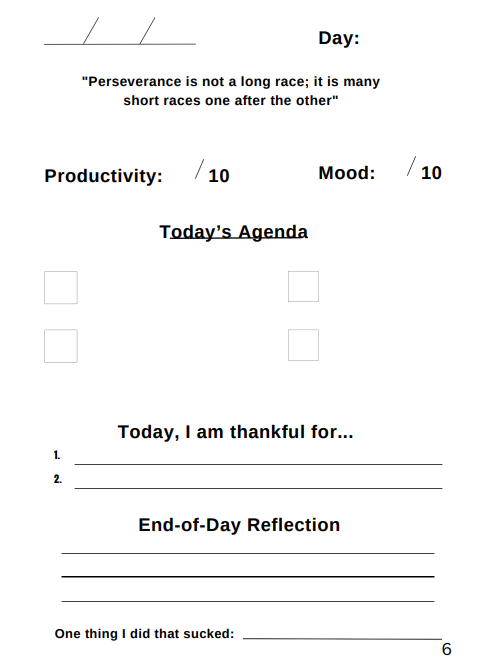
Every day you write:
- Date
- Day number (Day 1, Day 10, etc.)
There is also a motivational quote.
Reading it daily helps shift your mindset before starting the day.
4️⃣ Productivity & Mood Tracker
At the end of the day, rate:
- Productivity (out of 10)
- Mood (out of 10)
This builds emotional and performance awareness.
Over time, you start noticing patterns like:
- Low productivity after poor sleep
- Better mood on exercise days
This is where real self-improvement starts.
5️⃣ Today’s Agenda (Daily Planning)
Here you write what you want to do today.
Examples:
- Learn Python – Module 1
- Attend college lecture
- Client work
- Practice communication skills
This prevents mental clutter and keeps you focused.
6️⃣ Gratitude Section (Mental Reset)
Gratitude is powerful.
In this section, write things you’re thankful for:
- Parents
- Health
- Food
- Shelter
Gratitude releases serotonin, which:
- Calms the mind
- Reduces anxiety
- Improves emotional balance
This is why journaling feels peaceful.
7️⃣ End of Day Reflection (Most Powerful Section)
This is where growth happens.
You reflect on:
- What went well
- What didn’t go well
- What you’ll improve tomorrow
Example:
- What went well?
I completed my main task. - What didn’t go well?
I wasted time scrolling. - One improvement for tomorrow:
Start work before checking phone.
This stops life from running on autopilot.
8️⃣ “One Thing I Sucked At” (Without Self-Hate)
This section is not for guilt.
It’s for honest awareness.
Examples:
- “I checked Instagram during deep work.”
- “I didn’t follow my planned schedule.”
- “I woke up late.”
You identify one small mistake, not your entire personality.
This builds maturity and accountability.
9️⃣ Weekly Review & Goals
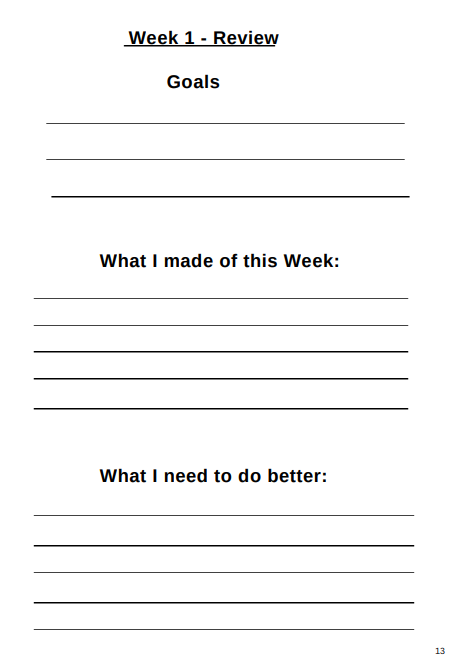
At the end of the week, you review:
- Goals achieved
- Progress made
- Areas to improve
This weekly analysis helps you:
- Identify strengths
- Fix weaknesses
- Plan better next week
This is how real consistency is built.
How Much Time Does Journaling Take?
Just 5 minutes a day.
But the impact is huge:
- Better focus
- Higher productivity
- More confidence
- Stronger discipline
That’s why it’s called 1% Better Everyday.
Who Should Use This Journal?
This journaling method is perfect for:
- Students
- Beginners in self-improvement
- Professionals
- Creators
- Anyone struggling with consistency
You don’t need experience.
You just need 5 honest minutes daily.
If you want:
- Clarity instead of confusion
- Discipline instead of procrastination
- Growth instead of regret
Start journaling today.
The 1% Better Everyday Journal makes it simple, structured, and effective.
If you still have questions, you can connect with us on Instagram for help.